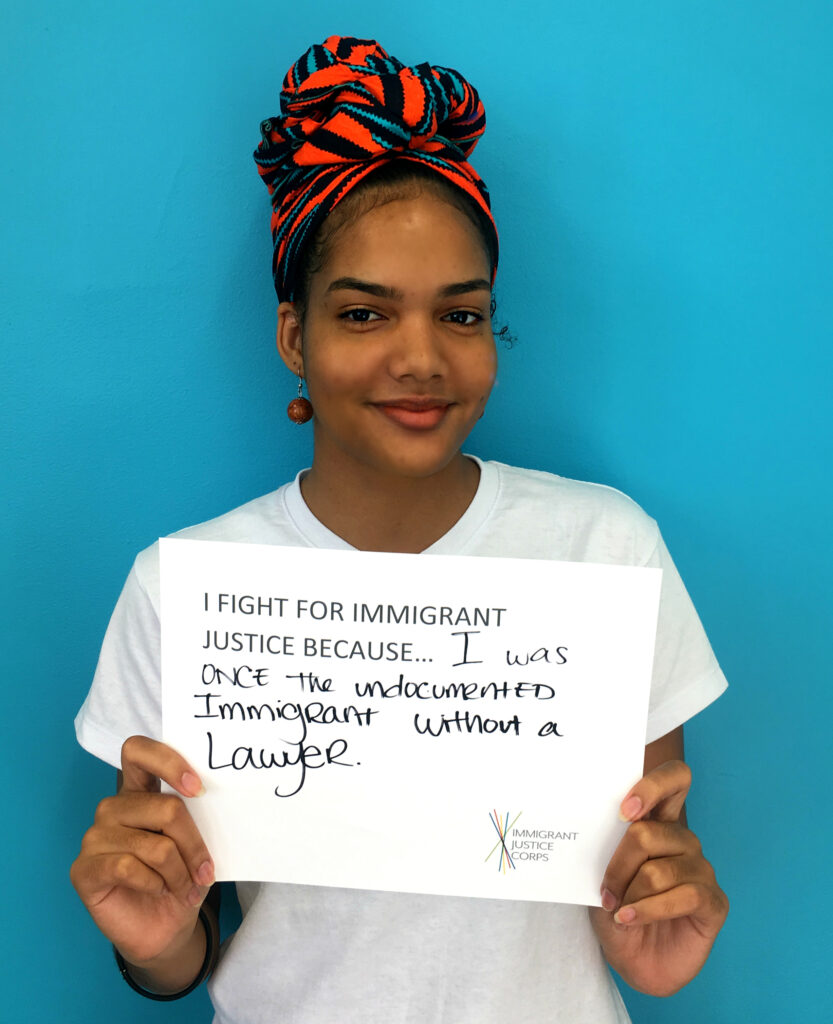
Informing communities - Enrique Lopez Ramirez

For immigrants in the United States facing an unjust and confusing system, access to information is key. Knowing their rights, the immigration processes and who they can trust is essential to ensuring individuals are able to navigate the system. But it’s not always easy to get information to communities that need it.
Immigration advocates must get creative, pioneering new programs and strategies to make sure immigrants of all ages get the information they need. Three IJC Fellows share stories of programs they have started, in collaboration with their host organizations, and the impact they have seen in their communities.
Enrique Lopez Ramirez, a 2024 Justice Fellow working at Las Americas, shares about monthly asylum workshops and how he’s worked to improve the program to better assist clients. Enrique is a graduate of the University of Connecticut School of Law.
When I joined Las Americas Immigrant Advocacy Center, I was immediately handed over a new and still developing program: our monthly asylum workshops. Las Americas had seen a massive need in the community for help with completing and filing asylum applications, and its vision was to develop a program to address this vital need. So over the summer of 2024, they hosted workshops where people could come in and get help filling out their applications.
With my work, the program has improved. We now have systems in place to quickly help people change their venue (another huge need), have improved Know Your Rights presentations that we present at each workshop, and have developed a referral protocol that helps people find the right place to go for their needs when we discover that asylum may not be the best way to proceed. For example, we found someone asking help for asylum because the judge had given this person an asylum application during a master hearing and asked the person to complete it. We discovered that this person was actually a legal permanent resident, so we instead helped with a cancellation of removal application. We also found someone who was going to marry their U.S. citizen partner, and we were able to navigate them through the I-130 process, which was better than their asylum claim.
Even for asylum seekers, this program helped improve their chances of simply getting their application filed on time. We found a case whose court was in New York, and this person was in El Paso, so a day before the filing deadline we found someone in New York who could submit the application. A similar situation happened with someone who wanted to seek asylum but whose court was in Denver and whose family of six had four separate cases. I was able to consolidate the cases and change venue so that this individual could have a fighting chance to file an application with the rest of the person’s family unit.
The asylum workshop has been a great way to learn as a lawyer how to effectively address the needs of a larger community, as well as how to manage a project. I am grateful that IJC was able to work with Las Americas to give me this opportunity.